Top 10 Oversized Fluffy Jacket Types for Global Buyers

Time:2026-10-09 Author:Ethan
0%

Global buyers are looking beyond warmth when selecting an Oversized Fluffy Jacket. They want softness, visual impact, dependable construction, and practical value. A jacket may look luxurious under showroom lights, yet feel heavy, flat, or restrictive outdoors. That difference matters.

Trend forecaster David Wolfe once said, “Fashion is a form of ugliness so intolerable that we have to alter it every six months.” His observation explains why fluffy outerwear keeps changing. Buyers now compare teddy fleece, faux shearling, brushed pile, quilted padding, and hooded silhouettes. Each type creates a different balance between comfort and appearance. Some designs suit mild city winters. Others need wind protection, water resistance, or layered styling. The most attractive option is not always the most useful one.

This guide examines the top 10 Oversized Fluffy Jacket types for international purchasing teams. It considers fabric density, lining quality, fit consistency, seam strength, packaging, and seasonal demand. These details influence returns and customer satisfaction. They also affect shipping volume, because oversized garments require more space. Small measurements can create large costs.

There is no perfect universal jacket. Climate, culture, retail positioning, and customer habits all change the decision. A plush jacket that succeeds in Seoul may feel excessive in London or Miami. That is the difficult part. Buyers must question trend reports, inspect samples, and test movement before placing large orders. Visual appeal starts the conversation, but reliable performance builds trust.
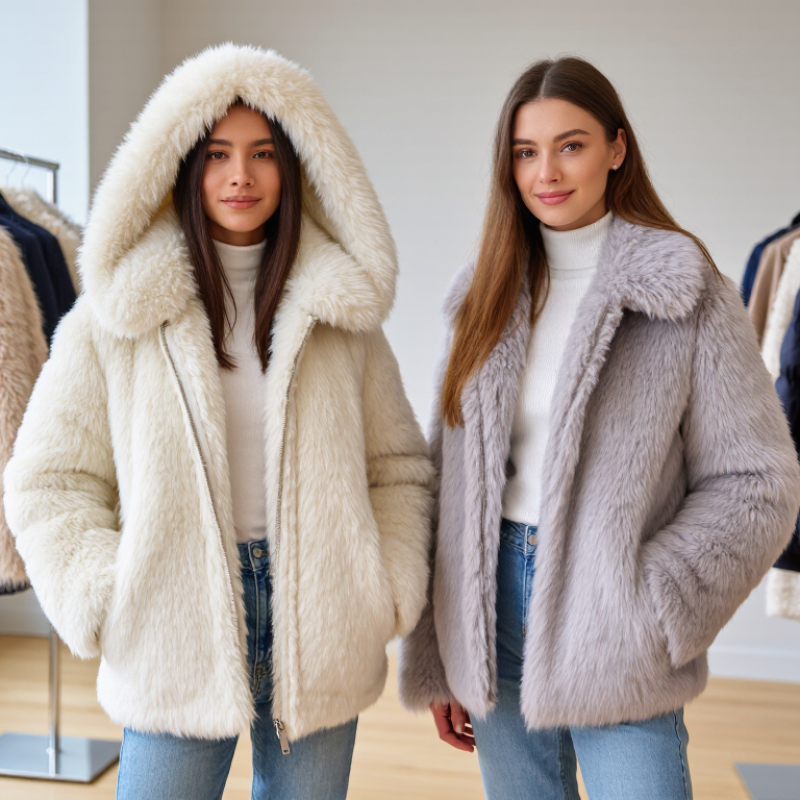
Top 10 Oversized Fluffy Jacket Types for Global Buyers

Definition and Key Features of Oversized Fluffy Jackets

An oversized fluffy jacket is outerwear designed with extra volume, soft texture, and a relaxed silhouette. It usually has dropped shoulders, wider sleeves, and a longer body. The shape should feel generous, not shapeless. Extra room allows layering over sweaters or workwear during colder seasons. However, oversized does not automatically mean warmer. Insulation, wind resistance, and construction matter more than appearance.

The defining feature is a raised, fluffy surface. This may come from fleece, brushed fabric, synthetic pile, or quilted filling. High-quality versions keep their loft after repeated compression. A dense outer fabric helps block wind, while a smooth lining reduces friction over knitwear. Buyers should inspect seam strength, cuff recovery, zipper function, and pocket depth. Small details affect daily performance. Very useful details.

During sample evaluation, I check whether the shoulders sit naturally and whether the hem lifts when the wearer moves. A bulky collar can look attractive but may restrict visibility. Long fibers may also collect dust or flatten after washing. Care labels, colorfastness tests, and shrinkage checks deserve attention before bulk purchasing. The word “fluffy” can mislead. Some jackets feel soft in a showroom but lose texture after poor laundering. A better specification describes fiber length, fabric weight, filling type, lining composition, and tested care conditions. This makes comparisons more reliable for global buyers.

Top 10 Oversized Fluffy Jacket Types for Global Buyers

Definition and Key Features of Oversized Fluffy Jackets

Oversized fluffy jackets are loose-fit outerwear designed with soft, high-pile, brushed, quilted, or insulating materials to create a voluminous silhouette and enhanced warmth. The chart compares ten common jacket types using an indicative warmth score from 1 to 10, based on insulation level, fabric density, wind protection, and coverage. Values represent general garment-construction characteristics and exclude company or brand data.

Top 10 Oversized Fluffy Jacket Types by Design and Function

Top 10 Oversized Fluffy Jacket Types for Global Buyers

Top 10 Oversized Fluffy Jacket Types by Design and Function

Design and function should guide oversized fluffy jacket buying. The first type is the hooded puffer, offering warmth around the head and neck. The cropped puffer suits high-waisted outfits but gives less lower-body coverage. A longline coat protects the hips during cold commutes. The reversible jacket offers two looks and better packing value. A stand-collar style blocks wind without adding hood bulk. The sleeveless gilet works over knitwear and supports indoor layering. A water-resistant shell suits wet climates, while a lightweight quilted style fits travel use. A belted jacket creates shape, though tight belts can reduce comfort. The final type is a workwear-inspired jacket with large pockets and reinforced panels.

Material choices deserve careful checking. Textile Exchange’s Materials Market Report 2024 states that global fiber production reached 124 million tonnes in 2023. Polyester represented about 57% of total output. That figure explains its common use in fluffy outerwear, but it does not prove superior quality. Buyers should inspect pile density, lining strength, zipper performance, and seam recovery. Recycled fibers may support lower material impact, yet certification and traceability still matter. I have seen attractive samples shed fibers after limited wear. Softness alone can mislead.

Tips: Match jacket length to climate and transport habits. Request abrasion, colorfastness, and wash-test results. Check pocket depth with gloves. Leave room for a sweater, but avoid excessive volume. A practical size chart should include sleeve length and back width. Some oversized cuts look impressive online, then restrict movement in real use.

Materials, Insulation, and Construction Methods

Oversized fluffy jackets vary widely in feel, warmth, and durability. For global buyers, the silhouette matters, but material selection decides daily performance. High-pile polyester creates a soft teddy or shaggy surface with consistent color. Faux shearling combines a smooth outer face with a dense, wool-like interior. Fleece feels lighter and dries faster, making it practical for changeable weather. Wool blends add natural warmth, though they may require tighter quality control. Small details matter.

Insulation changes warmth, weight, and packing volume. Recycled polyester fiberfill offers stable performance and easier care than many natural fills. Lofty synthetic insulation suits oversized puffer shapes because it recovers after compression. Natural down can provide excellent warmth, but buyers should request traceability and responsible sourcing records. Lining fabric also deserves attention. A slippery lining improves layering, while brushed lining feels warmer against lightweight clothing. Fit can mislead. A large jacket may look warm but lose heat through open cuffs, weak hems, or poor panel alignment.

Construction determines whether the jacket survives repeated wear. Quilted sections should hold insulation evenly, without cold gaps between channels. Reinforced shoulder seams support heavier fabrics and reduce tearing during movement. Dense stitching helps control fluffy pile near pockets and closures. Zippers should move smoothly after lining layers are assembled, not only during sampling. In one fitting review, an oversized sleeve looked stylish but restricted hand access at the cuff. The pattern needed revision. Buyers should examine seam strength, wash testing, colorfastness, and measurement tolerance before production. These checks are less impressive than appearance, yet they often reveal the real quality.

Global Buyer Considerations for Sizes, Markets, and Climate

Top 10 Oversized Fluffy Jacket Types for Global Buyers

Global buyers should match oversized fluffy jackets with regional body shapes, retail habits, and weather. Popular options include teddy jackets, sherpa overshirts, faux-shearling coats, quilted puffers, hooded fleece jackets, cropped jackets, longline coats, reversible styles, fluffy vests, and lightweight pile jackets. A relaxed fit needs clear measurements, not vague labels. Chest width, sleeve length, shoulder drop, and garment length should appear in centimeters and inches. A buyer in Seoul may prefer a compact oversized cut, while a Northern European customer may expect room for thick knitwear.

Climate changes the product decision. The World Meteorological Organization reported that 2023 was the warmest year recorded, increasing demand for lighter transitional layers in some markets. Cold regions still require wind-resistant shells, insulated lining, and longer hems. Humid markets need breathable construction and moisture-resistant finishes. Fluffy texture alone is not warmth. It can also trap moisture.

Material planning deserves careful review. Textile Exchange’s Materials Market Report 2024 recorded global fiber production at about 124 million tonnes in 2023. Recycled polyester represented approximately 12% of total fiber output. Buyers should request fiber composition, recycled-content evidence, wash testing, and shedding evaluations. Certifications help, but they do not replace factory verification. Size grading remains imperfect across countries. That is normal, but ignoring it creates costly returns. Test samples on different body types before bulk production. Keep the feedback visible.

Top 10 Oversized Fluffy Jacket Types for Global Buyers - Global Buyer Considerations for Sizes, Markets, and Climate

No. Oversized Fluffy Jacket Type Typical Construction Approx. Comfort Range* Best-Fit Climate Suitable Global Markets Recommended Size Strategy Key Buyer Considerations
1 Long Faux-Fur Coat Long pile synthetic fur, lined interior, relaxed or dropped-shoulder cut About 5°C to 15°C Cool, dry winters and urban cold-weather conditions Northern Europe, East Asia, North America, Southern South America Use full body measurements; offer petite and tall lengths where possible Check fur direction, shedding, lining comfort, garment weight, and storage volume
2 Teddy Fleece Overshirt Jacket High-pile polyester fleece with shirt collar, snap or zip closure About 8°C to 18°C Mild autumn, spring, and transitional climates Western Europe, coastal North America, Japan, Australia, New Zealand Keep an easy layering allowance of approximately 8–12 cm at the chest Prioritize anti-pilling performance, sleeve mobility, snap durability, and wash stability
3 Sherpa-Lined Utility Jacket Cotton or cotton-blend outer shell with thick sherpa lining and utility pockets About 3°C to 12°C Cool, moderately dry climates and outdoor casual use North America, Europe, South Korea, Central Asia, parts of South America Add room through the upper back and arms for layering over knitwear Evaluate fabric abrasion, pocket capacity, seam strength, and lining thickness
4 Faux-Shearling Aviator Jacket Faux-leather or woven outer shell with shearling-style body and collar lining About 0°C to 10°C Dry cold, windy urban winters, and transitional weather Europe, North America, East Asia, Turkey, and colder metropolitan regions Use shoulder, sleeve, and bicep measurements because thick lining reduces mobility Inspect collar structure, shell flexibility, lining attachment, and resistance to surface cracking
5 Quilted Puffer Jacket with Fleece Panels Quilted synthetic insulation combined with fleece or plush side and collar panels About -5°C to 8°C Cold, dry climates requiring lightweight warmth Canada, Northern Europe, Northeast Asia, and inland continental regions Provide actual garment measurements because loft can vary significantly by fill weight Compare insulation weight, quilting stability, zipper protection, and packability
6 Oversized Teddy Bomber Plush teddy fleece body, rib-knit cuffs and hem, bomber-style zip front About 5°C to 15°C Cool urban environments and casual daily wear North America, Europe, China, Japan, and Australia during winter Balance oversized chest volume with standard sleeve length to avoid a bulky fit Check rib recovery, zipper smoothness, collar height, and pilling after repeated wear
7 Recycled-Fiber Plush Fleece Jacket Soft brushed or high-pile polyester fleece, often with recycled polyester content About 7°C to 17°C Mild to cool climates and indoor-outdoor layering Western Europe, East Asia, Australia, New Zealand, and coastal regions Offer inclusive chest and hip grading; include layer-friendly ease without excessive length Request fiber-content verification, recycled-content documentation, and anti-static testing
8 Hooded Faux-Fur Parka Water-resistant outer shell, synthetic insulation, plush or faux-fur hood trim About -10°C to 5°C Cold and changeable climates with wind or light precipitation Northern Europe, Canada, Northern United States, Northeast Asia, and high-latitude markets Allow room for thick sweaters; specify hood, sleeve, and hem adjustability Verify water-repellent performance, wind protection, insulation distribution, and hood safety
9 Cropped Faux-Fur Jacket Short synthetic-fur body, smooth lining, wide sleeves, and relaxed cropped hem About 8°C to 18°C Mild winter, evening wear, and fashion-focused transitional seasons Western Europe, East Asia, North America, Gulf-region winter collections, and South America Publish back length and sleeve length prominently; consider extended and petite proportions Confirm coverage expectations, lining cling, shoulder width, and compatibility with high-waisted styles
10 Reversible Plush Jacket Two-sided design, such as plush fleece on one side and smooth woven fabric on the other About 5°C to 15°C Mild to cool climates where versatile layering is valuable Europe, North America, Japan, South Korea, Australia, and travel-oriented markets Size for the thicker side; use two-sided garment measurements and avoid overly tight armholes Assess seam finishing on both sides, reversible hardware, colorfastness, and added garment weight

*Temperature ranges are approximate comfort guidelines for average adult urban use with normal layering. Actual performance varies with insulation weight, wind, humidity, activity level, fit, and personal cold tolerance. Buyers should confirm garment measurements, fiber composition, care instructions, and applicable market labeling requirements before placing orders.

Quality Standards, Sourcing Factors, and Care Requirements

Top 10 Oversized Fluffy Jacket Types for Global Buyers

Quality begins with the jacket’s structure, not its exaggerated silhouette. Popular options include teddy fleece, sherpa-lined, boucle, long-pile faux fur, quilted puffer, hooded parka, reversible plush, cropped oversized, blanket coat, and water-resistant fluffy styles.

Buyers should check fiber composition, fabric weight, seam strength, zipper performance, and lining stability. A soft handfeel can mislead. Test pilling under ISO 12945 and colorfastness under ISO 105. For padded styles, inspect fill distribution after compression and recovery.

Sourcing choices should reflect climate, shipping conditions, and expected retail use. Textile Exchange’s 2024 Materials Market Report states that global fiber production reached about 132 million tonnes in 2023. This scale increases pressure to document recycled content, traceability, and waste controls. Suppliers should provide batch-level composition records, restricted-substance testing, and dimensional stability results.

Ask for samples after washing, not only fresh samples. That exposes hidden shedding, twisting, or lining shrinkage. Recycled fibers may support material goals, but certification claims still require verification.

Care instructions must match the actual construction. Long-pile surfaces usually need gentle washing, low mechanical action, and thorough air drying. High heat can flatten fibers or damage synthetic insulation.

Quilted jackets need careful drying to prevent clumping. Faux-fur panels may require brushing after drying. Retail labels should state water temperature, drying limits, ironing restrictions, and professional-care conditions clearly.

The European Environment Agency reports that longer garment use can significantly reduce annual environmental impacts, yet durability testing is often treated as an afterthought. That weakness deserves review. A jacket that looks impressive for one season is not a reliable global product.

FAQS

What defines an oversized fluffy jacket?

It has extra volume, a soft raised surface, and a relaxed shape. Dropped shoulders and wider sleeves are common. Oversized should still allow movement.

Does a larger jacket always provide more warmth?

No. Insulation, wind resistance, lining, and construction matter more than size. A loose jacket can feel cold without adequate filling.

Which design suits cold commuting?

A longline coat covers the hips and reduces exposed areas. A hooded style protects the head and neck. Check visibility around bulky collars.

What should buyers inspect before ordering samples?

Check seam strength, zipper movement, cuff recovery, pocket depth, and lining stability. Try pockets while wearing gloves. Small details matter.

Which materials are commonly used for fluffy outerwear?

Common choices include teddy fleece, sherpa-style fabric, brushed textiles, synthetic pile, and quilted filling. Softness alone does not prove durability.

How can buyers test jacket quality?

Request abrasion, pilling, colorfastness, shrinkage, and wash-test results. Inspect fill recovery after compression. A fresh sample can hide problems.

What care does a fluffy jacket usually require?

Use gentle washing and low mechanical action. Air-dry thoroughly. High heat may flatten fibers or damage insulation. Some surfaces need brushing afterward.

How should buyers choose the correct oversized fit?

Leave space for a sweater, but avoid excessive volume. Check sleeve length, back width, hem movement, and shoulder position. Online images can mislead.

Are recycled fibers automatically the better choice?

Not always. Verify certification, composition records, traceability, and waste controls. Recycled content may support material goals, but claims need evidence.

What common mistake should global buyers reconsider?

They may focus too much on softness and appearance. I sometimes do that too. Durability, climate suitability, and washing results deserve equal attention.

Conclusion

An Oversized Fluffy Jacket combines a relaxed, roomy silhouette with a soft, voluminous surface designed to provide warmth, comfort, and visual appeal. This overview introduces ten major types, including hooded, quilted, reversible, longline, cropped, shearling-style, fleece, faux-fur, padded, and weather-resistant designs. Each type serves different styling and functional needs, from everyday urban wear to colder outdoor conditions. The discussion also explains how materials, insulation, lining, quilting, stitching, closures, and panel construction influence warmth, durability, weight, and overall performance.

For global buyers, selecting the right jacket requires attention to regional sizing preferences, target customer profiles, climate, humidity, storage, and seasonal demand. Buyers should also evaluate fabric consistency, filling distribution, seam strength, colorfastness, production reliability, packaging, and quality-control procedures. Clear care instructions, such as appropriate washing, drying, brushing, and storage methods, help preserve softness and shape. Together, these considerations support informed sourcing decisions and ensure that oversized fluffy outerwear meets practical, aesthetic, and market-specific expectations.


Ethan

Ethan

Ethan is a seasoned marketing professional with a deep expertise in our company's innovative product line. With a passion for sharing knowledge and insights, he takes the lead in regularly updating our corporate blog, where he explores industry trends, product features, and effective marketing......