How to Style an Olive Long Sleeve Top

Time:2026-10-28 Author:Sienna
0%

An Olive Long Sleeve Top can look polished, relaxed, or unexpectedly modern. Its muted green tone sits between utility and elegance, making it useful across changing seasons. Yet olive is not always easy to style. Poorly chosen shades can make an outfit appear dull, especially beside beige, yellow, or cool gray.

Industry data supports the value of adaptable clothing. The Business of Fashion and McKinsey’s State of Fashion 2025 report describes fashion growth as modest and consumers as increasingly focused on value. That shift makes versatile separates more practical than short-lived statement pieces. The Olive Long Sleeve Top fits this direction because it works with denim, tailored trousers, skirts, and layered outerwear. Cotton Incorporated’s consumer research also continues to highlight comfort, durability, and responsible material choices as important clothing considerations. These findings support a styling approach that considers fabric weight, garment longevity, and repeat wear.

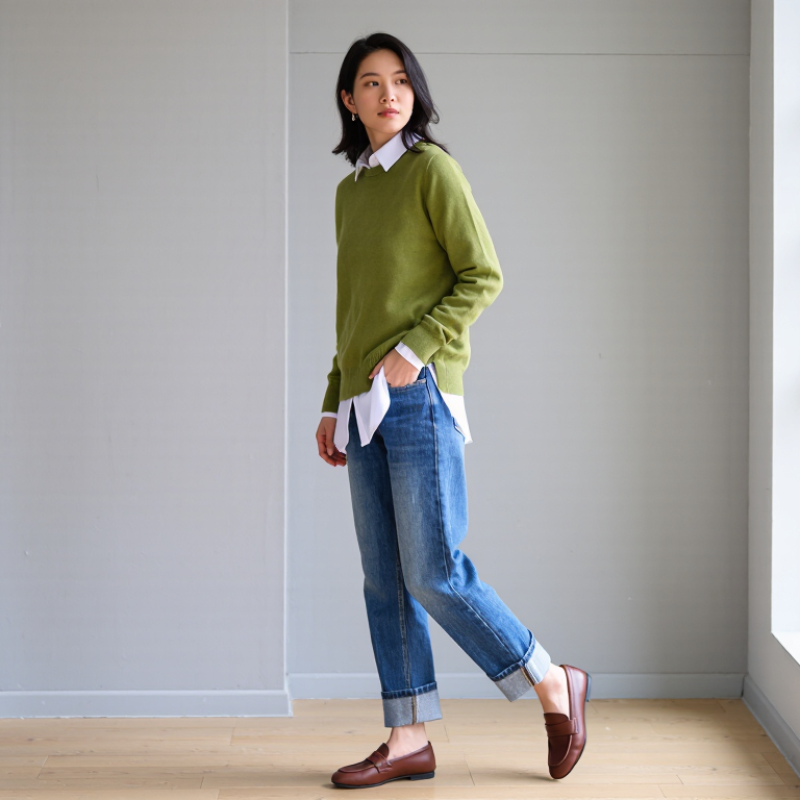
Small details matter. Try a soft olive knit with straight-leg jeans and brown leather loafers. For contrast, add a white cotton shirt underneath, leaving the collar visible. A darker olive top may suit warm skin tones, while a gray-green version can complement cooler palettes. Fit changes the message, too. A close cut feels refined; a loose cut feels casual. I sometimes prefer the relaxed option, although it can overwhelm a smaller frame.

There is no perfect formula. Lighting changes olive dramatically. Check the color near a window before buying. This guide will explore proportion, texture, layering, and accessories, while acknowledging that personal comfort should guide every final choice.
How to Style an Olive Long Sleeve Top

Define Olive’s Hue, Undertone, and the 60–30–10 Color Rule

How to Style an Olive Long Sleeve Top

Olive is a muted green with a brown or yellow cast. Its hue feels earthy, calm, and slightly military. The undertone matters more than many people expect. Warm olive usually shows yellow or golden hints, while cool olive can appear gray, blue, or softly mossy. Check it outdoors. Indoor lighting can distort the shade.

Start with the fabric and the top’s exact color. A warm olive top pairs naturally with cream, camel, tan, and warm denim. A cooler olive version works well with charcoal, navy, white, and dusty blue. Hold the garment near your face. If your skin looks clearer, the undertone probably supports you. If your complexion looks dull, the color may need contrast. My own first attempt relied on a warm beige scarf, but the combination looked flat under daylight.

Use the 60–30–10 color rule to keep the outfit balanced. Let olive occupy about 60 percent through the top and trousers or skirt. Add a secondary shade for 30 percent, such as dark denim or soft brown.

Reserve 10 percent for a sharper accent, like rust, muted coral, or a small silver detail. Keep the accent limited. Too much bright color can overpower olive’s quiet depth.

The rule is flexible, not a uniform. A cream trouser can become the dominant 60 percent, with olive as the 30 percent layer. That balance can shift.

Choose a 180–240 GSM Fabric for Structure, Comfort, and Layering

An olive long sleeve top becomes easier to style when its fabric has enough body. A 180–240 GSM knit usually offers structure without feeling stiff. GSM means grams per square meter, helping you compare fabric weight consistently. In my wardrobe, 180 GSM works well indoors and under a light jacket. At 240 GSM, the top feels warmer and holds its shape better. That difference is noticeable.

For everyday dressing, I pair a medium-weight olive top with straight-leg denim and simple leather shoes. The muted green works against cream, charcoal, tan, and faded blue. Roll the cuffs once when the sleeves feel generous. Leave them full length under a sleeveless vest. A firm 220 GSM fabric creates a smoother base beneath a wool overshirt. Check the shoulder seam. It should sit close to your natural shoulder, not pull across the chest. I once chose a heavier top for layering and regretted it in a warm office.

Fabric composition still matters alongside GSM. Cotton can feel breathable, while a small amount of stretch may improve movement and recovery. Touch the inside surface before buying; rough fibers can become irritating after several hours. Follow the care label, then reshape the top while damp. My imperfect rule is to test one outfit while sitting, walking, and reaching. A color that looks rich in daylight may appear dull under indoor lighting. Try both. This simple check often reveals whether the olive shade and fabric weight suit your actual routine.

Balance Top Length and Bottom Rise Using the Fashion 1:2 Proportion

How to Style an Olive Long Sleeve Top

The fashion 1:2 proportion keeps an outfit visually balanced. Let the olive top occupy roughly one part of your look. The bottoms should show about two parts of visible length. A high-rise skirt or trousers make this ratio easier to achieve. Tuck the top fully, or use a small front tuck. Leave only a narrow section of fabric above the waistband. This creates a clear waistline without making the torso look crowded.

Olive works well with cream, dark denim, charcoal, and warm brown. I often pair an olive long sleeve top with high-rise, straight-leg trousers. The longer leg line supports the 1:2 effect. If the top falls below the hip, its extra fabric can shorten the legs visually. Try a gentle tuck before choosing a belt. Thin belts usually preserve the clean division between top and bottom. A structured fabric also holds the proportion better than very soft jersey.

Fit changes everything. A short top may reveal too much when you lift your arms. A loose top may need a side tuck instead. The rule is useful, but not perfect. I sometimes prefer a slightly longer top with relaxed trousers, especially on casual days. Check the outfit from the side, not only in a mirror. Sit down and walk a few steps. If the waistband disappears, the rise may be too low for this styling method. Small adjustments often matter more than strict measurements.

How to Style an Olive Long Sleeve Top - Balance Top Length and Bottom Rise Using the Fashion 1:2 Proportion

A practical proportion guide using garment measurements, visual balance, and styling adjustments

Styling Dimension Recommended Measurement or Ratio How It Applies to an Olive Long Sleeve Top Visual Result
Fashion 1:2 proportion Approximately 1 part visible top length to 2 parts visible lower-body length Use a top that ends near the high hip or tuck it into trousers or a skirt to keep the upper section visually shorter. Creates a longer-looking lower body and a balanced outfit silhouette.
Top length Approx. 56–64 cm from shoulder to hem for a standard women’s regular-fit top, depending on size and cut Choose a hem that finishes around the natural waist to upper hip. A longer top can be partially tucked. Defines the waist area without adding unnecessary bulk at the hips.
Bottom rise High rise: approximately 25–30 cm; mid rise: approximately 20–25 cm, measured from the crotch seam to the top edge of the waistband Pair the olive top with high-rise bottoms when the goal is to visually shorten the top section and extend the leg line. Raises the apparent waistline and supports the 1:2 visual balance.
Tuck placement Full tuck, French tuck, or a 3–5 cm front tuck Use a full tuck for a polished look; use a small front tuck to create waist definition while keeping relaxed coverage at the back. Controls the visible top-to-bottom ratio without changing the garment.
Bottom hem position Full-length trousers should fall close to the top of the shoe; cropped hems commonly finish above the ankle Keep the hemline clean and uninterrupted when wearing an olive top with neutral trousers. A continuous vertical line makes the lower half appear more elongated.
Sleeve proportion Sleeve cuff should generally finish at or slightly below the wrist bone Push the sleeves to mid-forearm if the top feels visually heavy or oversized. Exposes the wrist and adds lightness to the upper body.
Color pairing Olive works well with neutrals such as ivory, beige, navy, black, denim blue, and warm grey Use lighter bottoms for softer contrast or dark bottoms for a streamlined tonal effect. Controls contrast while preserving the grounded character of olive.
Best bottom silhouettes High-rise straight-leg, wide-leg, bootcut, tapered trousers, or A-line skirts Match a fitted top with fuller bottoms, or pair a relaxed top with a cleaner, straighter lower silhouette. Maintains proportion by balancing volume between the upper and lower body.
Example outfit calculation Visible top section: 30 cm; visible lower-body section: about 60 cm A 60 cm olive top can be front-tucked into 28 cm high-rise trousers, leaving approximately 30 cm of visible top above the waistband. Approximates the 1:2 visual relationship while remaining wearable and flexible.
Adjustment for a long torso Use a higher rise and a shorter visible top section Choose a high-rise waistband and tuck the olive top at the natural waist rather than letting it cover the hips. Visually lifts the waistline and reduces the appearance of a long upper body.
Adjustment for a short torso Use a moderate rise and avoid excessive fabric above the waistband Try a mid-rise bottom with a neat half tuck, or choose a top that skims rather than bunches at the waist. Creates breathing room between the neckline and waistband.

Measurement note: Garment measurements vary by size, pattern, fabric, and fit. The 1:2 proportion is a visual styling guideline rather than a fixed body-measurement rule.

Style Olive with Three Neutral Families: Black, Cream, and Denim

An olive long sleeve top works like a quiet bridge between color and neutral dressing. I usually start with black when I want sharper definition. Try black straight-leg trousers, a narrow belt, and simple leather flats. The deep contrast makes olive look richer, especially under indoor lighting. Roll the sleeves once to show the wrist and prevent the outfit from feeling heavy. Keep the jewelry restrained. One metal detail is often enough.

Cream creates a softer, warmer combination. I pair the top with cream jeans or tailored trousers, then add a textured cardigan in a similar tone. The contrast is gentle, but not bland. Choose off-white rather than bright white if the olive has yellow undertones. That small adjustment can make your skin look more balanced. I sometimes add a brown-toned bag, although this can muddy the outfit when the olive is very dark. Test the colors near a window.

Denim gives olive an easy, practical character. Medium-wash jeans make the top feel relaxed, while dark denim looks more polished. For shape, tuck only the front edge into high-rise jeans and leave the sides loose. Add ankle boots or clean canvas shoes, depending on the setting. I used to match olive with too many earthy accessories, and the result looked flat. A little contrast works better. Try a pale denim jacket over the top, but check the sleeve volume first. Too many layers can hide the clean line that makes this color combination effective.

Finish the Outfit with Contrast, Texture, and Two Complementary Accessories

How to Style an Olive Long Sleeve Top

Finish the Outfit with Contrast, Texture, and Two Complementary Accessories

An olive long sleeve top works best when its muted color has something brighter nearby. Try cream trousers, pale denim, or warm stone-colored chinos. The contrast keeps the outfit from looking heavy. I prefer a slightly relaxed top with sleeves pushed to the forearms. It shows shape without making the outfit feel overly arranged.

Texture gives olive more depth. Pair a smooth cotton top with corduroy trousers, a ribbed skirt, or a brushed wool overshirt. Avoid matching every surface. Too much softness can make the outfit look flat. A crisp canvas tote adds structure, while a woven scarf introduces a quieter pattern. Keep the scarf near the neckline, where its texture can frame your face.

Choose two complementary accessories and let them support the color balance. A tan leather belt warms the olive tones and defines the waist. Add small brass earrings for a subtle, golden contrast. I once paired olive with black accessories and found the result harsher than expected. A softer brown belt might have worked better. That small mistake changed how I judge contrast: strong does not always mean successful.

Leave one or two buttons open if the neckline allows it. Add ankle boots in brown suede for another tactile layer, but count them as part of the outfit rather than extra decoration. The goal is controlled contrast, not visual noise.

FAQS

What fabric weight suits an olive long sleeve top?

Choose 180–240 GSM for structure, comfort, and layering. Around 180 GSM feels lighter indoors. At 240 GSM, it feels warmer and holds shape better.

How can I style an olive top with black clothing?

Pair it with black trousers, a narrow belt, and simple flats. The dark contrast makes olive look richer. Roll the sleeves once.

Does olive work with cream colors?

Yes, cream creates a softer and warmer outfit. Try cream trousers with a textured cardigan. Off-white may suit yellow-toned olive better than bright white.

What type of denim works best with olive?

Medium-wash denim looks relaxed and practical. Dark denim creates a more polished appearance. Try a partial front tuck with high-rise jeans.

How should the top fit beneath another layer?

Check that the shoulder seam sits near your natural shoulder. The fabric should not pull across your chest. A firm 220 GSM knit can create a smooth base.

What fabric details should I inspect before buying?

Check the fiber composition and touch the inside surface. Cotton may feel breathable, while slight stretch can improve movement. Rough fibers may irritate your skin later.

How can texture improve an olive outfit?

Pair smooth cotton with corduroy, ribbed fabric, or brushed wool. Avoid making every surface soft. A crisp canvas tote adds useful structure.

Which accessories complement an olive long sleeve top?

Try a tan belt and small brass earrings. These details warm the muted green without creating noise. I once used only black accessories, and the result felt too harsh.

Conclusion

An Olive Long Sleeve Top is a versatile foundation for polished, everyday outfits. Olive sits between green and brown, with a naturally muted, earthy undertone that works well with both warm and cool neutrals. Use the 60–30–10 color rule to keep the look balanced: let one main color dominate, add a secondary shade for contrast, and reserve a smaller accent for visual interest. For the best combination of structure, comfort, and layering, choose fabric around 180–240 GSM. This weight helps the top hold its shape without feeling bulky.

Pay attention to proportion by pairing the top’s length with the rise of your bottoms, following a flattering 1:2 balance. Style olive with three dependable neutral families: black for sharp contrast, cream for softness, and denim for relaxed texture. Complete the outfit with contrast through color or silhouette, add tactile interest with materials such as knitwear or suede-like textures, and finish with two complementary accessories, such as a belt and simple jewelry.


Sienna

Sienna

Sienna is a skilled marketing professional with a deep expertise in our company’s core products and services. With a passion for innovation and detail, she plays a pivotal role in crafting insightful blog posts that not only highlight the unique features of our offerings but also provide valuable......