Why Choose a Leopard Sleeveless Top for Global Sourcing?
Global apparel sourcing is moving toward products that combine visual impact, flexible styling, and manageable production risk. A Leopard Sleeveless Top fits this direction well. Its printed pattern creates shelf visibility without requiring complex construction. The sleeveless cut also supports warmer markets, layered outfits, and seasonal collections. McKinsey’s The State of Fashion 2025 reports that fashion growth remains cautious, while consumers increasingly expect value and product relevance. This makes adaptable designs commercially useful.
Material planning still matters. Textile Exchange’s Materials Market Report 2024 states that global fiber production reached approximately 124 million tonnes in 2023. It may exceed 160 million tonnes by 2030. Buyers should therefore compare cotton, recycled polyester, viscose, and blended fabrics carefully. Fabric weight affects drape, shipping cost, and customer comfort. Print accuracy matters too. A dark rosette can look muddy after washing. Reliable suppliers should provide colorfastness results, shrinkage data, size specifications, and pre-production samples. OEKO-TEX certification can also support safer material evaluation, although certification alone does not guarantee perfect supplier performance.
The design is not risk-free. Leopard patterns can appear dated or overly loud in some markets. Cultural preferences, climate, and modesty expectations require local research. Buyers should test several scales, backgrounds, and neckline shapes before committing to large volumes. Small pilot orders may reveal more than a polished presentation. A strong Leopard Sleeveless Top is not simply attractive; it is measurable, adaptable, and responsibly sourced. The best decision combines trend awareness with uncomfortable questions about quality, waste, and repeat demand.
Why Choose a Leopard Sleeveless Top for Global Sourcing?
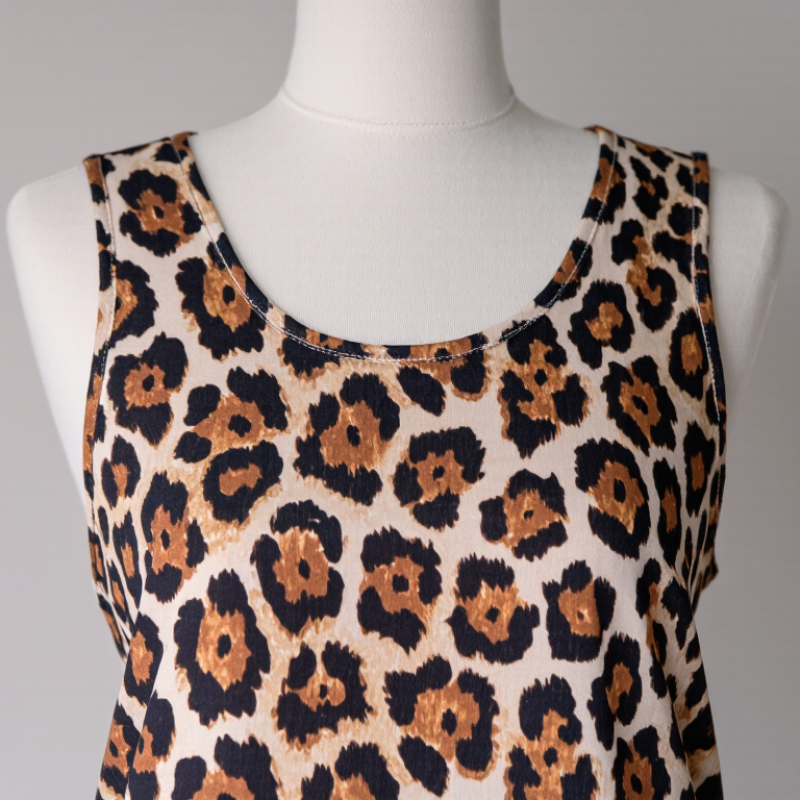
Leopard sleeveless tops combine a bold animal-inspired print with an easy, warm-weather silhouette. The design usually features exposed shoulders, a clean armhole, and a neckline that frames the print without competing with it. During sample reviews, buyers should examine the print scale closely. Small spots can create a refined look, while larger markings feel more expressive. The visual balance matters.
Fabric choice shapes the product’s performance. Lightweight cotton blends offer breathability and a soft hand feel. Polyester blends can improve color consistency and reduce wrinkling during transport. A practical target is medium-light fabric weight, especially for summer collections. The armholes need smooth binding or careful overlocking. Rough edges quickly affect comfort. Fit is not always perfect.
For global sourcing, repeatable details are essential. Suppliers should provide a measured specification sheet, approved artwork, and clear color references. Buyers can request wash testing, colorfastness checks, and seam-strength evaluations before bulk production. The neckline should recover after movement, while the side seams should remain flat. A slightly relaxed cut may serve more markets than an extremely fitted shape. However, this assumption needs local size data.
Print alignment can also reveal production weaknesses. Uneven spots near the neckline may look accidental rather than fashionable. Buyers should review pre-production samples under natural and indoor lighting. Packaging should prevent crushing without adding unnecessary material. A dependable sourcing process leaves room for correction, because attractive samples can still hide grading or shrinkage problems.
| Data Dimension | Definition or Typical Specification | Design and Sourcing Relevance | Recommended Quality Checkpoint |
|---|---|---|---|
| Product Definition | A sleeveless upper-body garment featuring a leopard-inspired spotted print, generally designed for casual, fashion, resort, or layered wear. | The simple silhouette supports multiple markets and can be positioned as a standalone top or as a layering piece. | Confirm that the approved print scale, color balance, and silhouette are consistent across the production sample. |
| Common Silhouette | Frequently produced in relaxed, regular, slim, cropped, or tunic-length shapes. | Offering more than one fit option helps address regional preferences and different retail positioning. | Measure bust, body length, armhole, and shoulder points against the approved measurement chart. |
| Fabric Options | Common choices include polyester woven fabric, polyester jersey, rayon or viscose blends, cotton jersey, and lightweight satin-type materials. | Fiber selection affects drape, breathability, wrinkle resistance, color appearance, and final cost. | Verify fiber content through supplier documentation and, where required, independent textile testing. |
| Typical Fabric Weight | Lightweight to midweight fabrics commonly range from approximately 90 to 180 g/m², depending on construction and end use. | Lower weights improve warm-weather comfort, while higher weights can provide better opacity and structure. | Check fabric weight, opacity, stretch recovery, and dimensional stability after laundering. |
| Neckline Designs | Common neckline options include crew, V-neck, scoop, square, halter, and cowl necklines. | Neckline selection changes the garment’s visual character and can support casual, evening, or resort collections. | Inspect neckline symmetry, seam smoothness, binding width, and resistance to stretching. |
| Armhole Construction | Armholes may use self-fabric binding, folded hems, facing, clean finishing, or decorative trim. | Clean armhole finishing improves comfort and reduces fraying, especially in sleeveless styles. | Check that the armhole does not gape, twist, irritate the skin, or expose unfinished seams. |
| Leopard Print Layout | Prints may use small, medium, or oversized rosettes with irregular or repeat-based placement. | Print scale influences perceived garment size, fashion direction, and fabric consumption. | Review print registration, repeat alignment, color consistency, and placement at front and back panels. |
| Color Direction | Traditional palettes often combine tan, brown, black, and cream; contemporary versions may use monochrome, muted, or high-contrast colors. | Color variation allows the same product concept to serve different seasonal and regional assortments. | Approve a physical color standard and check shade variation between fabric lots and garment panels. |
| Closure and Detail Options | Styles may be pull-on designs or include buttons, zippers, ties, elastic inserts, or adjustable straps. | Minimal closures simplify production, while functional details can improve fit and perceived value. | Test attachment strength, zipper operation, button security, and the durability of adjustable components. |
| Sizing Approach | Typical size ranges may use numeric, alpha, or regional size systems, with measurements adapted to the target market. | Accurate grading reduces fit inconsistency when selling through multiple countries or channels. | Use a market-specific size chart and conduct fit evaluation on representative base and extreme sizes. |
| Print and Colorfastness | Performance depends on the printing method, fiber type, dye or pigment system, and finishing process. | Reliable colorfastness helps preserve the leopard pattern during washing, rubbing, and perspiration exposure. | Evaluate colorfastness to washing, rubbing, perspiration, and light according to the applicable test method. |
| Seam and Hem Finish | Common finishes include overlock seams, lockstitch construction, narrow hems, turned hems, and coverstitch details. | Suitable seam construction supports comfort, appearance, and resistance to seam opening. | Inspect stitch density, skipped stitches, loose threads, puckering, seam allowance, and hem evenness. |
| Care Considerations | Care instructions depend on fiber content, print technology, trims, and garment construction; many lightweight tops use gentle washing and low-temperature drying guidance. | Clear care information can reduce shrinkage, color transfer, and damage during consumer use. | Validate care instructions through laundering tests before finalizing labels and packing materials. |
| Packaging Format | Common export formats include individually folded units in polybags, size-separated cartons, or reduced-plastic packaging where appropriate. | Packaging should protect the print and garment shape while meeting destination-market requirements. | Check carton dimensions, packing ratio, moisture protection, barcode accuracy, and package condition after transport simulation. |
| Global Sourcing Advantage | The basic sleeveless construction is adaptable, while print scale, fabric, neckline, colorway, and trim can be customized. | Modular design options make it easier to create market-specific variations without redesigning the entire product. | Use a clearly controlled specification sheet covering artwork, measurements, materials, tolerances, and approved samples. |
It combines an animal-inspired print with exposed shoulders and a warm-weather silhouette. The neckline should frame the pattern without competing with it. Spot size changes the mood. Small spots look refined, while large markings feel bolder.
Lightweight cotton blends provide breathability and a soft hand feel. Polyester blends can improve color consistency and reduce transport wrinkles. A medium-light fabric weight often suits summer collections. Fit is never guaranteed.
Check smooth armhole binding, clean overlocking, and flat side seams. The neckline should recover after stretching. Inspect loose threads and rough edges closely. Small flaws hurt comfort.
Request fabric composition, GSM, size charts, and recent production photos. Ask for a physical sample before approving larger quantities. Review printing, cutting, sewing, and inspection arrangements. Internal control may reduce communication gaps, but it cannot remove them.
Compare print alignment near the shoulders, neckline, and side seams. Wash the sample according to its care label. Check shrinkage, colorfastness, pilling, print cracking, and seam strength. Screens can mislead.
Include measurements, tolerances, fabric standards, print placement, labels, packaging, and defect limits. Also confirm minimum order quantities, lead times, payment terms, and seasonal capacity. A second sample after washing and grading may reveal hidden problems.
Request separate costs for fabric, printing, labor, packing, inspection, and delivery. Compare landed cost rather than factory price alone. Testing, rework, and port charges may be excluded from low quotations. The estimate can still be imperfect.
Confirm fiber content, care instructions, origin details, and destination-market labeling requirements. Request relevant material and safety documents before bulk production. Check carton size, gross weight, packing quantities, and shipping documents. Allow buffer time for inspection and customs clearance.
A Leopard Sleeveless Top combines a sleeveless silhouette with a distinctive animal-inspired pattern, offering a versatile option for casual, resort, and fashion-focused collections. Its appeal comes from the balance of visual impact and easy styling, while different fabric weights, necklines, hem shapes, and fits allow buyers to adapt the design for various markets. The print remains popular because it can create a confident statement while working with neutral colors and multiple seasonal trends.
For global sourcing, importers should assess fabric composition, colorfastness, stitching, pattern alignment, sizing consistency, and overall workmanship. Supplier evaluation should include production capacity, sample approval, quality-control procedures, communication efficiency, and reliable lead times. Buyers should also confirm target pricing, minimum order quantities, labeling, packaging, documentation, and compliance with applicable safety and textile requirements. Careful planning of shipping methods, delivery schedules, duties, and customs procedures can reduce delays and support predictable costs from production through final distribution.

 Xinhui Apparel