The Cropped Oversized Bomber Jacket balances two opposing ideas: a shortened hem and generous volume. That tension gives the piece its modern appeal. It can sharpen a simple outfit, but it can also overwhelm the body when proportions are ignored. A careful styling method matters.
The fashion market is changing, too. McKinsey & Company and The Business of Fashion’s State of Fashion 2025 describes cautious consumers and continued pressure on brands to prove value. Versatility now matters. ThredUp’s 2024 Resale Report projects the global secondhand apparel market will reach $350 billion by 2028. That shift encourages shoppers to style existing pieces creatively, rather than chase every seasonal trend.
A Cropped Oversized Bomber Jacket works best when one area looks relaxed and another looks controlled. Try wide-leg trousers with a visible waistband, or pair the jacket with a narrow ribbed dress. A fitted tank can balance padded shoulders. Clean sneakers keep the silhouette practical. Heeled boots add tension.
Small details carry weight. Check the sleeve length. Let the cuff stop near the wrist bone. Keep the hem above the widest part of your hips when possible. That rule is useful, not universal. Body shape, fabric stiffness, and personal comfort can change the result.
Avoid making every layer oversized. It may look intentional in a photograph, yet feel bulky in motion. I have found that a slightly exposed shirt hem often improves the outfit. Still, styling is not a fixed formula. The best look may come from breaking one rule carefully.
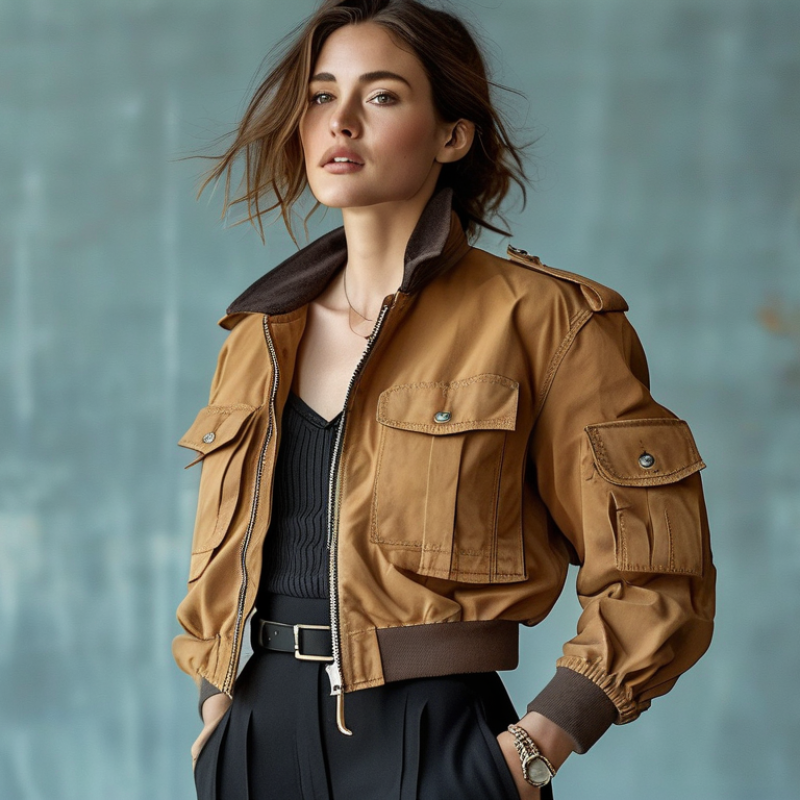
A cropped oversized bomber jacket balances a short length with generous volume. Its hem usually sits near the waist or upper hip. The shoulders may extend beyond your natural frame. That contrast creates its distinctive shape. In my fittings, the best size leaves room across the chest without swallowing the neck. Check the shoulder seam carefully. It should fall slightly outward, not halfway down your arm. A ribbed hem can also change the fit. If it grips your waist tightly, the jacket may balloon above it. That effect can look intentional, but it may feel awkward when sitting.
Try the jacket over a thin shirt, then test it with a knit layer. Raise both arms. The back should move without pulling sharply across the shoulders. Keep the sleeves softly gathered at the cuffs. They should not cover your entire hand. High-waisted trousers or skirts usually support the cropped proportion. A longer shirt underneath can add a visible layer, though too much fabric may disrupt the outline. I once chose an extra-large fit for a stronger silhouette. It looked impressive in photos but became tiring after an hour. That mistake taught me to judge movement, not only appearance. Stand sideways in a mirror. The jacket should look broad, but still controlled. Slight imbalance is acceptable. Complete symmetry is not always better.
A cropped oversized bomber creates volume above the waist, so the base layer should add length without bulk. I usually start with a slim, lightweight T-shirt or fine-knit top. Let it extend two or three inches below the jacket hem. That small detail keeps the cropped cut intentional. It also creates a clear vertical line. Keep it simple.
For cooler days, a fitted ribbed turtleneck works well beneath roomy sleeves. Choose smooth fabric, because thick collars can crowd the neckline. A long-sleeved thermal top adds warmth without competing with the jacket’s shape. I prefer muted tones that relate to the trousers, especially with a bold jacket. This connection can visually lengthen the body. Be careful with strong contrast.
An untucked shirt can add useful structure, but its hem should not fall too far below the jacket. Excess fabric may look accidental rather than relaxed. I learned this after wearing a soft oversized shirt with a short jacket. The proportions felt heavy and unfinished. Now I check the outfit from the side, not only from the front. Move your arms, sit down, and notice whether the layer bunches at the waist. A slightly imperfect drape is acceptable. Discomfort is not.
A cropped oversized bomber jacket needs visual counterweight below the waist. Start with high-rise straight-leg trousers or relaxed jeans. Their longer line offsets the jacket’s wide sleeves and short hem. Leave two inches of ankle visible when possible. This small gap prevents the outfit from looking heavy.
The 2024 ThredUp Resale Report projects the global secondhand apparel market will reach 350 billion dollars by 2028.
That growth supports a practical styling approach: reuse trousers, skirts, and shoes already in your wardrobe. Try a fluid midi skirt with clean leather loafers for contrast. A fitted knit dress and low-profile sneakers create softer movement. For a sharper structure, choose pleated trousers with square-toe boots. Keep the footwear visually substantial, but not bulky. Otherwise, the jacket can dominate the silhouette.
Color matters more than people expect. Match dark shoes with dark trousers to extend the leg line. With pale denim, use cream, grey, or muted brown footwear.
The Business of Fashion and McKinsey’s State of Fashion 2024 report identifies value-conscious shopping as a major industry pressure. One adaptable jacket should earn repeated wear. I still find some combinations too predictable. A deliberately mismatched shoe can work, but only when the trouser shape remains controlled. Check the side view. That is where proportion usually fails.
A cropped oversized bomber jacket creates volume above the waist, so color placement matters. Start with one calm base, such as charcoal trousers or an ivory ribbed dress. Then add one stronger color through a knit top or narrow scarf. Deep red, cobalt, and moss green can sharpen the jacket’s relaxed shape without making the outfit noisy. Keep it intentional.
Texture gives the jacket more depth. Try a smooth cotton jacket over a brushed wool sweater, then balance both with straight denim or polished leather-like trousers. If the jacket has a glossy finish, avoid too many shiny pieces. Matte fabrics will make the outfit look considered. Soft contrast often feels more sophisticated than matching everything exactly. I once paired a satin jacket with a satin skirt, and the result looked flat rather than luxurious.
Accessories should support the cropped proportion. A small structured shoulder bag can echo the jacket’s shape, while slim earrings keep the neckline visible. For shoes, choose a clean sneaker, ankle boot, or pointed flat based on the outfit’s weight. A belt may help define the waist, but it can also interrupt the jacket’s natural drape. Test the look while walking, not only in a mirror. Sleeves may bunch, collars may shift, and that slight disorder can be useful. If the colors compete after adding accessories, remove one piece. Less can work.
Color contrast helps balance the volume of a cropped oversized bomber jacket. Higher contrast creates a stronger focal point, while lower contrast produces a softer, more coordinated look.
Contrast ratios are calculated from the relative luminance of each color pair using the WCAG contrast-ratio formula.
A cropped oversized bomber jacket changes dramatically with the setting. For work, choose a matte fabric and a clean, structured shirt. Keep the jacket open over high-waisted trousers. This exposes the waistline without looking careless. Add loafers or low leather shoes for a quieter finish. For evening plans, swap the shirt for a fine-knit top and tailored skirt. Small earrings can sharpen the volume. The jacket should frame the outfit, not swallow it.
Seasonal layering requires more planning. In spring, wear a cotton T-shirt beneath the jacket and roll the sleeves slightly. In autumn, add a thin wool sweater, but avoid bulky cuffs. The cropped cut works well with high-rise denim, especially when cold air reaches the waist. A scarf can help, though an oversized one may compete with the collar.
According to WRAP’s Valuing Our Clothes report, extending clothing life by three months can reduce carbon, water, and waste footprints by 5–10%. Versatility is practical, not merely fashionable.
For winter, select a lightly insulated version and layer a close-fitting base layer underneath. For summer evenings, choose a lightweight textile and pair it with a slip dress or wide-leg trousers.
UNEP reports that textiles create 2–8% of global greenhouse-gas emissions, so repeated styling has measurable value.
I still sometimes over-layer this jacket and lose its shape. That mistake is useful. Photograph the outfit before leaving, then remove one piece if the shoulders look crowded.
Choose a slim T-shirt or fine-knit top. Let it extend two or three inches below the hem. Keep the fabric light.
Yes. A fitted ribbed turtleneck adds warmth and keeps the shape controlled. Choose a smooth, thin collar.
Its hem should sit only slightly below the jacket. Too much fabric can look accidental. Check the side view.
Move your arms and sit down. Watch for bunching around the waist. A little unevenness is fine. Discomfort is not.
High-rise straight-leg trousers or relaxed jeans work well. Their longer lines balance wide sleeves and a short hem.
Try leaving about two inches visible. This small gap can prevent the outfit from looking heavy.
Yes. A fluid midi skirt creates movement with clean loafers. A fitted knit dress gives a softer outline with low-profile sneakers.
Keep shoes substantial, but not bulky. Match dark shoes with dark trousers to extend the leg line. Pale denim pairs well with cream, grey, or muted brown.
Sometimes. A mismatched shoe may add interest when the trouser shape stays controlled. I still find some pairings too predictable. Check the side view.
Styling a Cropped Oversized Bomber Jacket is all about creating balance between its short length and roomy shape. Start by considering the jacket’s volume and choose base layers that keep the outfit streamlined, such as fitted tops, lightweight knits, or neatly tucked shirts. High-waisted trousers, straight-leg jeans, skirts, and tailored shorts can help define the waist while maintaining pleasing proportions. Complete the look with footwear that matches the outfit’s structure, from sleek sneakers and ankle boots to polished loafers.
Color, texture, and accessories should be added with intention. Neutral shades create an understated appearance, while one strong color can make the jacket the focal point. Mixing materials such as satin, denim, wool, or leather-inspired textures adds depth without overwhelming the silhouette. Adapt the outfit for different settings by choosing refined layers and structured accessories for dressier occasions, or relaxed basics for casual days. In warmer seasons, wear the jacket over breathable tops; in cooler weather, layer it with knitwear while keeping the overall shape comfortable and balanced.

Xinhui Apparel