China Top 10 Relaxed Fit Pullover Manufacturers

Time:2026-09-24 Author:Henry
0%

Choosing a supplier for a Relaxed Fit Pullover takes more than comparing catalog photos. Fabric weight, shoulder drop, rib recovery, and stitching all affect how a garment feels after repeated wear. A soft sample can still lose its shape. Details matter.

This guide introduces ten China-based manufacturers to help buyers begin a focused supplier search. It considers practical factors such as product range, customization options, sample development, production communication, and quality-control practices. These points can help brands compare suppliers more consistently, whether they need a small test order or a larger seasonal run. Each company’s capabilities may vary by style, fabric, and order requirements.

A useful shortlist is only a starting point. Request current specifications, confirm lead times in writing, and inspect a sample before making production decisions. Ask how the factory checks measurements, color consistency, and seam quality. A clear answer is a good sign. Still, no supplier profile can replace direct verification. Factory information and capabilities may change, and this overview should not be treated as a guarantee of performance. Buyers should assess each candidate against their own product standards, budget, and delivery schedule. Sometimes the best match is not the lowest quote, but the partner who explains limitations plainly and follows through on agreed details.
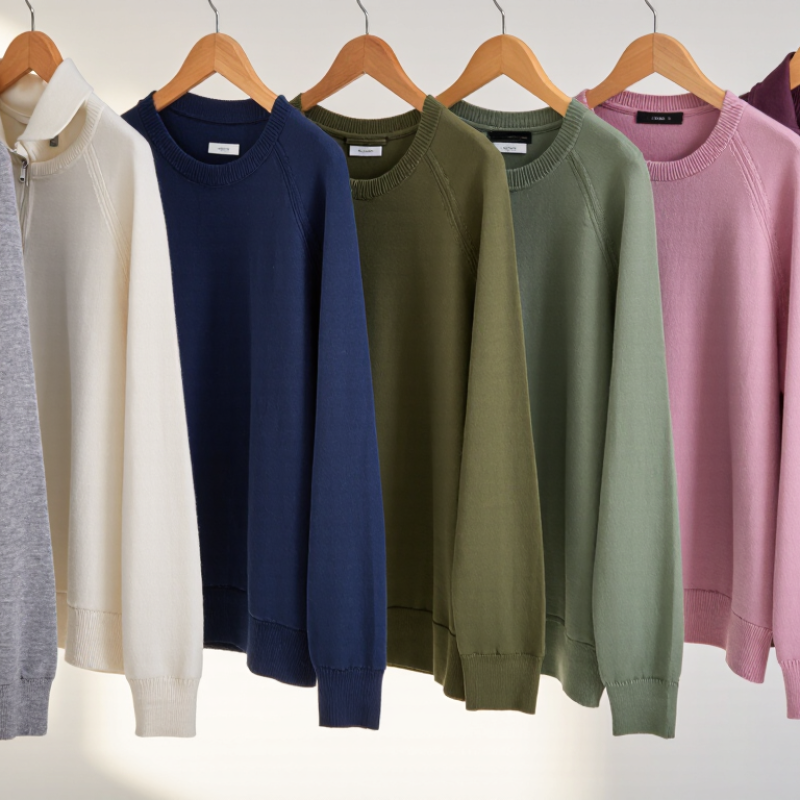
China Top 10 Relaxed Fit Pullover Manufacturers

Relaxed-Fit Pullovers: Ease, Silhouette, and Key Measurement Points

A relaxed-fit pullover should feel easy without looking shapeless. The extra room usually comes through the chest, upper sleeve, and body, while the shoulder may sit slightly lower than on a standard fit. Try it over a light shirt, then reach forward and lift your arms. The fabric should move without pulling across the back or riding sharply above the waist.

Small detail. A dropped shoulder can add softness, but too much width may make the sleeves twist during wear.

Measure a sample flat on a table, with the garment smoothed but not stretched. Record chest width from underarm to underarm, shoulder width, body length from the high shoulder point, and sleeve length from the shoulder seam. Double the flat chest measurement when comparing it with body circumference, then allow room for the intended layering. Check the hem opening too; a tight rib hem can gather a generous body into an awkward balloon shape. Measurements vary with fabric weight and construction, so compare the finished garment with a washed sample when possible. I would not assume every relaxed silhouette needs the same ease. That is an easy mistake. A soft, heavy knit may drape well with less volume, while a crisp fabric often needs more room to fall naturally.

Fabric Benchmarks: Common Pullover Weights of 180–350 GSM

China Top 10 Relaxed Fit Pullover Manufacturers

Fabric Benchmarks: Common Pullover Weights of 180–350 GSM

When reviewing China’s top ten relaxed fit pullover manufacturers, fabric weight deserves careful attention. A 180–220 GSM pullover feels light, breathable, and suitable for spring layering. It usually works well with cotton jersey or lightweight blended fabric. A 230–280 GSM style offers more structure without feeling bulky. This range is common for daily sweatshirts and relaxed streetwear. Heavier options reach 300–350 GSM. They provide warmth, stronger drape, and a fuller hand feel.

Fabric construction changes the result. French terry at 240 GSM may feel cooler than brushed fleece at the same weight. A loose fit also needs stable ribbing around the cuffs and hem. Otherwise, the garment can lose shape after repeated washing. During supplier evaluations, request fabric swatches, wash-test reports, and pre-production samples. Measure GSM after conditioning the fabric, not only from the mill’s specification sheet. Small differences matter.

Real production is rarely perfect. A listed 280 GSM fabric may measure 270–290 GSM across different panels. This variation can come from knitting tension, dyeing, or finishing. I would not reject a supplier immediately for a minor difference. Still, repeated deviation suggests weak process control. Check shrinkage, pilling, seam strength, and color fastness before placing larger orders. The softest sample is not always the most reliable choice.

China Top 10 Relaxed Fit Pullover Manufacturers - Fabric Benchmarks: Common Pullover Weights of 180–350 GSM

Indicative fabric benchmarks for relaxed-fit pullovers. GSM means grams per square metre; actual weight and performance vary by yarn, knit structure, finishing, and measurement method. These are fabric types, not manufacturer rankings.

No. Pullover fabric type Typical composition Common weight (GSM) Construction / hand feel Typical use and considerations
1 Lightweight cotton French terry 100% cotton or cotton-rich blend 180–220 Knit face with looped, unbrushed back; relatively light and breathable Suitable for mild-weather pullovers; check shrinkage and surface pilling after washing.
2 Midweight cotton French terry 100% cotton or cotton/polyester 230–280 Unbrushed loop-back knit with more body than lightweight terry A versatile year-round sweatshirt weight; relaxed cuts generally need suitable rib trims for shape retention.
3 Heavyweight cotton French terry Cotton or cotton-rich blend 290–350 Dense loop-back knit; substantial drape and structure Works for substantial relaxed-fit styles; increased fabric weight can affect garment weight and drying time.
4 Light brushed-back fleece Cotton/polyester blend or cotton-rich blend 220–260 Knit face with a brushed inner surface for added softness Provides more warmth than comparable unbrushed fabric; assess linting and pilling in wear tests.
5 Midweight brushed-back fleece Typically cotton/polyester or cotton-rich blend 270–320 Brushed interior and moderately dense knit body Common choice for cooler-weather sweatshirts; blend and finishing influence warmth, softness, and shrinkage.
6 Heavy brushed-back fleece Cotton/polyester blend or cotton-rich blend 320–350 Dense knit with a raised, insulating inner face Designed for warmer, heavier pullovers; verify bulk, seam handling, and dimensional stability.
7 Cotton-polyester loop-back terry Cotton/polyester blend; ratios vary 220–300 Unbrushed loop-back knit; blend can improve drying and shape recovery Useful for everyday casual pullovers; performance depends on fiber ratio and finishing.
8 Cotton-rich interlock knit Cotton or cotton/polyester blend 180–240 Double-knit structure with a smooth face and relatively stable surface Suitable for lighter pullover styles; it is generally less insulating than brushed fleece at similar weight.
9 Cotton-rich rib knit Cotton, often with elastane or polyester 200–300 Ribbed knit with greater crosswise stretch than plain jersey Often used for full-body or panel styles; check stretch recovery and garment growth during wear.
10 Cotton-polyester brushed fleece Cotton/polyester blend 240–330 Brushed inner surface; blend proportions and brushing affect hand feel A practical option for casual sweatshirts; specify fiber content and test pilling, colorfastness, and shrinkage.

Benchmark note: GSM values are indicative ranges, not fixed industry specifications. Confirm the finished fabric weight, tolerances, composition, and test method with the mill before production.

China’s Top 10 Manufacturers: Regions, Products, and Production Strengths

China’s relaxed-fit pullover manufacturers are concentrated in several established apparel regions, each with different production strengths. Zhejiang and Jiangsu offer broad knitwear networks, from yarn sourcing to finishing. Guangdong suppliers often handle varied styles and faster sample revisions. Shandong and Hebei have stronger links to cotton and basic garment production. These are useful patterns, not fixed rules; factory capabilities vary.

Typical products include cotton fleece pullovers, French terry styles, brushed sweatshirts, and lightweight loopback knits. A capable factory should explain fabric weight, shrinkage control, seam construction, and size grading clearly. Ask for measurements after washing, not only before. Check whether rib cuffs recover after stretching, and inspect shoulder seams on a physical sample. Small details matter.

The “top 10” should be judged by fit consistency, communication, and production control, rather than location alone. Request recent examples with similar fabric and relaxed silhouettes. Confirm how the supplier manages color matching and inspection across repeat orders. One limitation: online profiles rarely show the whole production floor. A polished sample can still hide uneven bulk quality, so independent checks are sensible. Relaxed fit sounds simple. It isn’t.

Quality Testing: ISO 105-C06 Colorfastness and ASTM D5034 Tensile Strength

China Top 10 Relaxed Fit Pullover Manufacturers

Reliable relaxed fit pullover manufacturers should prove fabric performance before bulk production. Two useful checks are ISO 105-C06 colorfastness and ASTM D5034 tensile strength. ISO 105-C06 evaluates color transfer during domestic or commercial washing. Testers wash fabric with standard detergent, control temperature, and compare staining against a grey scale. Clear records should identify the fabric lot, dye shade, washing cycle, and test result. Small details matter.

ASTM D5034 measures fabric breaking strength and elongation through a grab test. A laboratory clamps a fabric specimen and applies increasing force until it breaks. This helps assess shoulder seams, cuffs, and body panels during daily wear. Manufacturers with experienced quality teams normally test samples from different fabric rolls, not only one convenient piece. Reports should include specimen direction, conditioning, force values, and failure observations. Testing is not flawless. Uneven knitting, moisture, or cutting errors can influence results, so repeated sampling remains necessary.

Tips: Request both certificates and original laboratory data. Check whether the tested fabric matches the production fabric. Inspect wash samples after several cycles, especially dark colors. Ask for pre-production and final inspection records. A practical improvement is to photograph each sample before and after washing. This simple habit can reveal fading, pilling, or shape loss that a single number may miss.

China Top 10 Relaxed Fit Pullover Manufacturers — Quality Testing

ISO 105-C06 evaluates colorfastness to domestic and commercial laundering. Color change and staining are commonly assessed with grey scales graded from 1 (poor) to 5 (no or negligible change). ASTM D5034 measures fabric breaking force using a grab test; results depend on the fabric and test conditions, so the standard does not define a universal pass value. The chart shows the ISO grey-scale grading range, not manufacturer test results.

Supplier Comparison: MOQ, Lead Time, Certifications, and Export Capability

China Top 10 Relaxed Fit Pullover Manufacturers

Comparing ten Chinese relaxed fit pullover manufacturers requires more than checking product photos. MOQ often ranges from 300 to 1,000 pieces per color, while smaller workshops may accept fewer units with higher prices. Standard production usually takes 25 to 45 days after approval. Complex washes, embroidery, or custom ribbing can add two weeks. Ask whether the lead time includes fabric sourcing and final inspection. It often does not.

Certifications reveal production discipline, but documents require careful checking. ISO 9001 may support quality management, while GOTS or OEKO-TEX can help verify textile and chemical controls. BSCI or similar social-audit records provide useful factory information, though they are not a complete guarantee. Export-capable suppliers should explain customs paperwork, carton standards, labeling, and experience with your destination market. Request recent audit dates and sample shipping records. Some comparisons look impressive until these details are missing.

Tips: Ask for a size-set sample before bulk production. Test shrinkage after washing. Compare MOQ by color, not only by style. Confirm payment terms in writing. A video factory tour can help, but it should not replace an independent inspection. I have found that the cheapest quote rarely gives the clearest delivery promise. One overlooked weakness is communication during revisions. That matters.

FAQS

What fabric weight suits a lightweight relaxed fit pullover?

Choose 180–220 GSM for breathable spring layering. It feels light. Cotton jersey or a lightweight blend may work well. Check the fabric after washing.

When is 230–280 GSM a better choice?

This range gives more structure without excessive bulk. It suits daily sweatshirts and relaxed streetwear. The pullover should feel substantial, not stiff. That balance can be subjective.

What does a 300–350 GSM pullover feel like?

Heavier fabric provides warmth and a fuller hand feel. It also creates a stronger drape. A thick pullover may feel uncomfortable in mild weather. Fit and climate still matter.

Does fabric construction affect comfort at the same GSM?

Yes. A 240 GSM French terry can feel cooler than brushed fleece. The surface texture changes warmth and softness. Ask for physical swatches, not only photographs.

How can buyers check fabric weight accurately?

Measure GSM after conditioning the fabric. Do not rely only on the specification sheet. A listed 280 GSM fabric may measure 270–290 GSM. Small differences can affect consistency.

What should be tested before placing a larger order?

Test shrinkage, pilling, seam strength, and color fastness. Wash the sample according to expected care instructions. Inspect ribbing at the cuffs and hem. I would not trust softness alone.

What are common minimum order quantities and production times?

Orders often range from 300 to 1,000 pieces per color. Standard production may take 25–45 days after approval. Custom washes, embroidery, or ribbing can add about two weeks. Confirm whether fabric sourcing and final inspection are included.

Which documents and factory details deserve attention?

Request recent quality, textile safety, and social-compliance records. Check their dates and scope carefully. Ask about cartons, labels, customs paperwork, and destination-market experience. Documents are helpful, but not perfect proof.

How can buyers reduce communication and delivery problems?

Request a size-set sample before bulk production. Confirm payment terms and revision details in writing. Compare minimum quantities by color, not just by style. A factory video tour helps. It cannot replace independent inspection.

Conclusion

This guide explores the essential features of a Relaxed Fit Pullover, focusing on comfort, ease of movement, and a naturally loose silhouette. It explains key measurement points, including chest width, shoulder drop, sleeve length, body length, and hem opening, to help buyers evaluate fit consistency. The article also reviews common fabric benchmarks, with pullover weights typically ranging from 180 to 350 GSM depending on season, fiber blend, warmth, and durability requirements.

A practical overview of China’s top 10 manufacturers compares their regional advantages, product categories, customization capabilities, and production strengths without focusing on brand names. It also highlights quality-control procedures such as ISO 105-C06 colorfastness testing and ASTM D5034 tensile strength testing. Finally, readers can compare suppliers by minimum order quantity, lead time, certifications, communication efficiency, and export capability, making it easier to select a dependable manufacturing partner for different apparel programs.

Henry

Henry

Henry is a dedicated marketing professional with a profound expertise in the company's offerings. With years of experience in the industry, he possesses an impressive understanding of the market dynamics and consumer behaviors that drive success. Henry is committed to sharing his insights through......